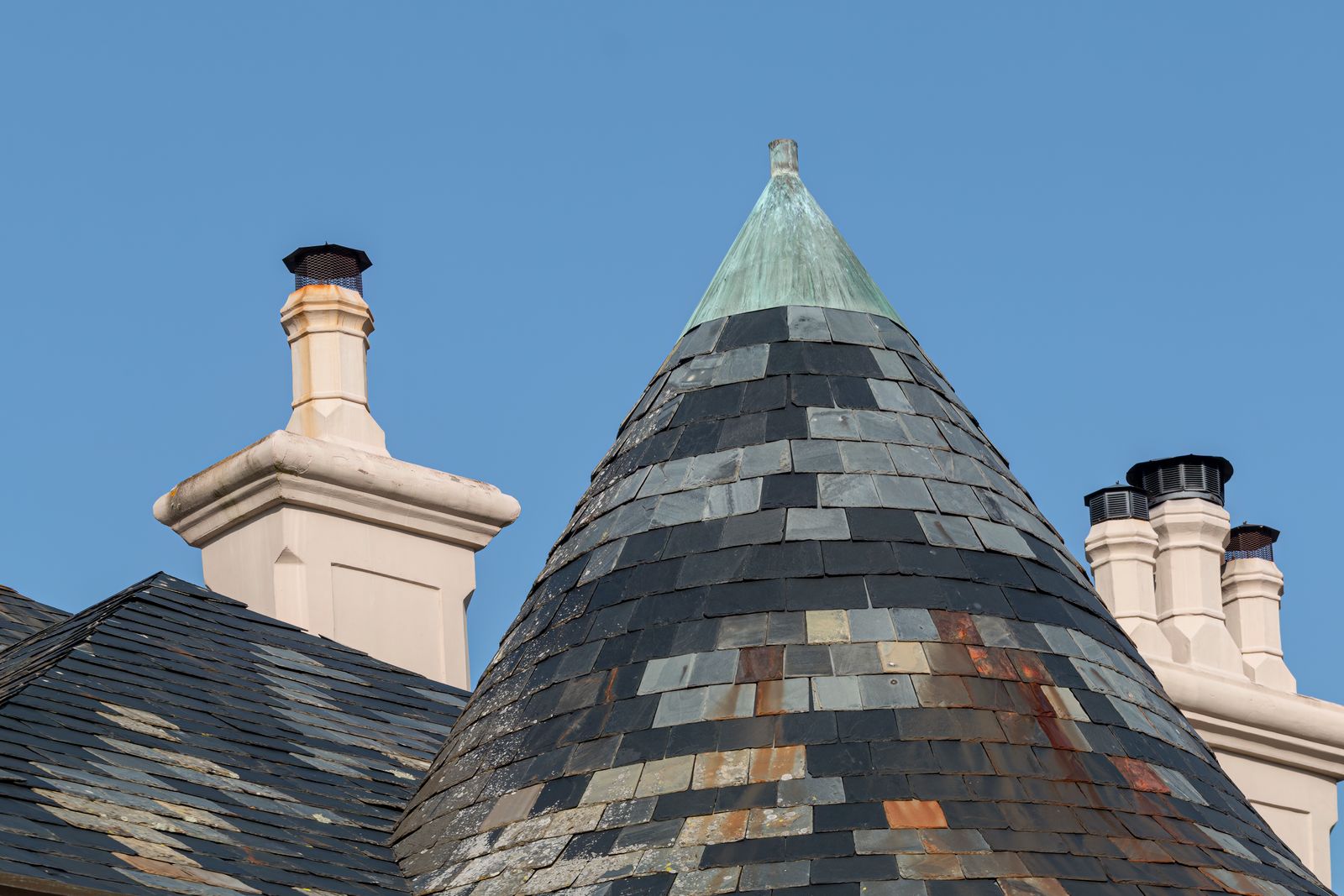
Can you match the slate that is already on my roof?
Usually, yes. Slate varies in size, thickness and colour depending on where it was quarried and when it went on, so matching is a case of getting up, measuring what is there and sourcing new or reclaimed to suit. On a front elevation that matters a great deal, because a patch in the wrong size or shade is visible from the pavement for the next forty years. On a rear elevation you have more latitude and it is worth saying so rather than spending your money on reclaimed you will never see.
Is reclaimed slate as good as new?
Good reclaimed slate is excellent and often a better match on a period roof. The catch is that reclaimed is only as good as the sorting, because slate that has already spent a century on a roof can be delaminating or have nail holes in the wrong place. Callum will tell you honestly whether reclaimed is the right call for your job or whether new slate, which comes with a known thickness and a known life, is the better spend.
Why do slates keep slipping off my roof?
Almost always nail sickness. The slates are fine, but the nails holding them have corroded through, so they let go one at a time, usually after wind. On a roof where that has started, the rest of the nails are the same age and the same story, so refixing them individually turns into an annual appointment. That is the point where it is worth costing a re-slate against another five years of repairs, and getting an honest opinion on which makes sense.
Do you use slate clips or nails?
New slating is nailed, which is how a slate roof is meant to be fixed. Clips, or tingles, are for putting an individual slipped slate back into an otherwise sound roof without disturbing the courses around it, and used that way they are perfectly sound. Where clips get a bad name is when a whole roof is held together with them, which is a sign somebody has been repairing a roof that needed replacing.
Can slate go on a low pitch roof?
Only within limits, and the limits are real rather than fussy. Slate relies on gravity and lap to shed water, so below a certain pitch it will let driving rain past no matter how well it is laid, and the answer is a bigger headlap, a different slate size, or a different covering entirely. If your roof is at the margin you will be told, because a slate roof laid too flat is a leak with a date on it.
Do you work on listed or conservation area property?
Yes, and the main thing it changes is what you are allowed to put back. In conservation areas and on listed property there is usually an expectation, and sometimes a condition, that the roof is re-covered in matching natural slate rather than a substitute. Worth checking with the council before ordering, and worth allowing for in the budget, because the matching material is generally the dearer option.